What If Griffey, Ichiro, Cal, and J-Rod Played on the Same Mariners Team? A Simulation Says 123 Wins
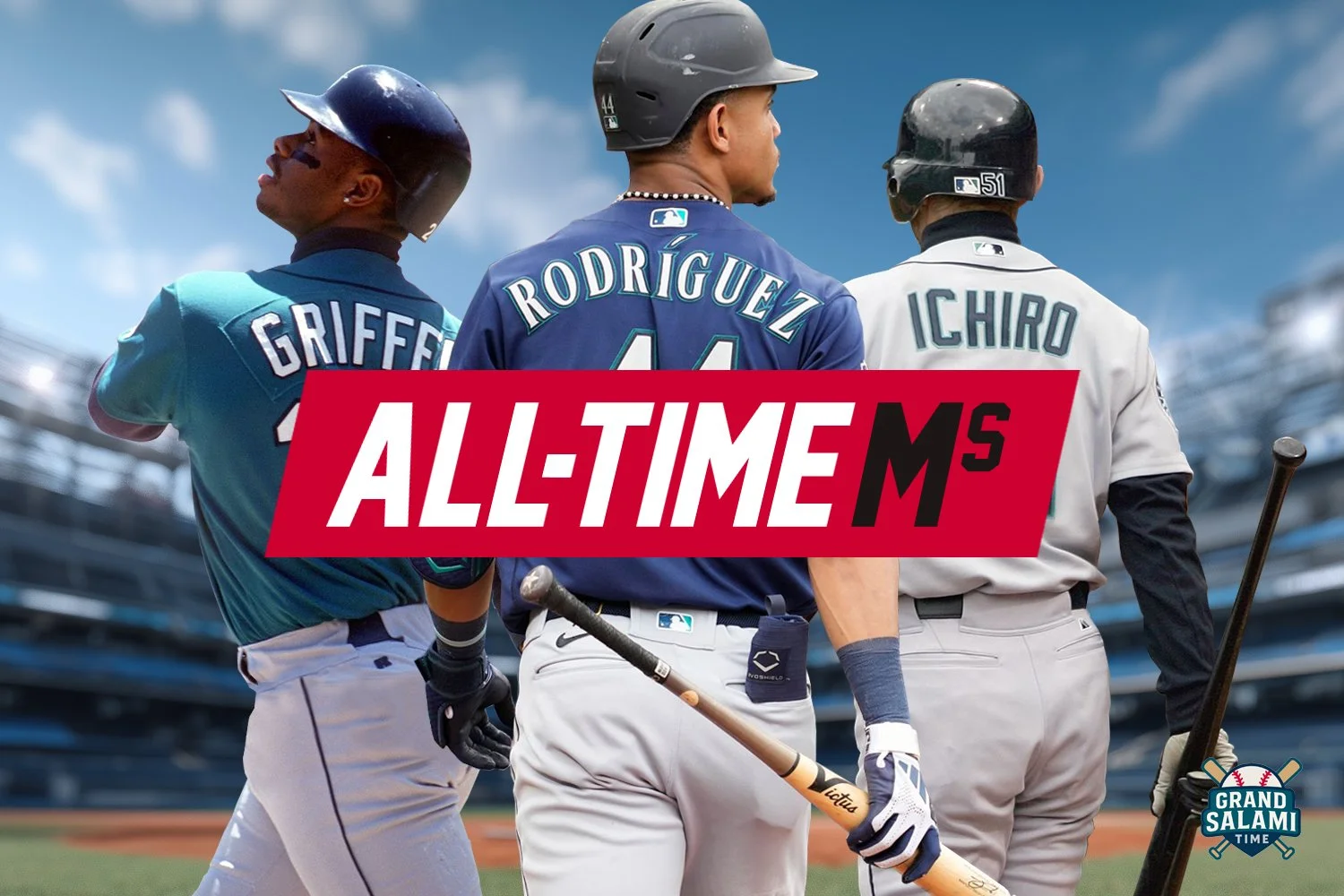
Rodriguez (Photo by Mitchell Layton/Getty Images); Griffey (Mandatory Credit: Jed Jacobson/ALLSPORT); Ichiro (Photo by Elsa/Getty Images)
I remember sitting in a room ten years ago with friends, just naming the all time Mariners from memory. Griffey, Ichiro, Edgar, Randy. Then the debates would start. Who is the all time third baseman? Does Jamie Moyer make the rotation? Is Félix already a lock for the HOF or do you need a longer peak? Every Mariners fan has had some version of that conversation, usually late, usually loud, and always ending with the same question. What would actually happen if you put the greatest Mariners of all time on the same team?
So we decided to simulate it. Instead of building a fantasy roster or stacking everyone at their single best season, we used realistic WAR ranges based only on what each player actually produced while wearing a Mariners uniform. Each player was assigned a minimum and maximum expected WAR and placed somewhere within that band, reflecting a fully established version of the player rather than a rookie year, injury season, or late career decline.
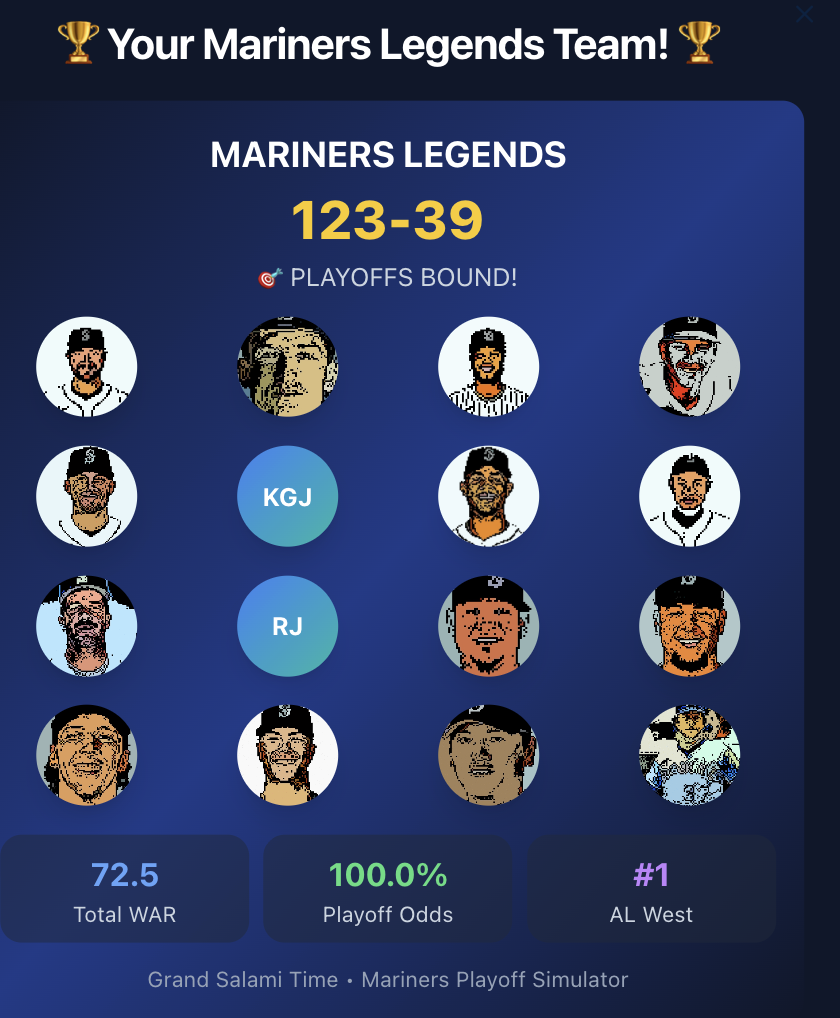
One might think this super team goes undefeated, right? Wrong. In MLB there is so much randomness and unpredictability in each game, the all time Mariners still easily break the All-Time Win record ( 2001 Mariners with 116 wins) and go 123-39! This also really puts in to perspective how magical that 2001 season really was.
The Results
At a team level, the simulated All-Time Mariners were dominant without being unrealistic.
A 73 WAR team would be the best team in MLB history. The 1927 Yƒankees came close with a WAR of 68 with Babe Ruth and Lou Gehrig who each had WARs that season of 12+. Then you have the 2001 Mariners 2nd all time with a WAR of 67 with a more balanced team led by Brett Boone, Ichiro, and Edgar.
However this team we put together is better than the 1927 Yankees and Better than the 2001 Mariners. The All-Time Great Mariners:
The Lineup: A Tour Through Mariners History
This lineup blends eras in a way that works surprisingly well in today’s game.
Cal Raleigh brings modern catcher value with power and durability. His WAR band reflects a player whose offense alone can swing games while still providing defensive value behind the plate.
John Olerud anchors first base with one of the cleanest offensive profiles in team history. High on base percentage, gap power, and quiet defensive excellence make him a stabilizer in a star heavy lineup.
Robinson Cano represents his prime Seattle years, not the seasons disrupted by injury or suspension. In this range, he is an elite contact hitter with power who controls the middle of the order.
Alex Rodriguez at shortstop is the most explosive version of A Rod. His Seattle WAR band reflects MVP level production while playing premium defense at the position. This version of Rodriguez changes games on his own.
Kyle Seager holds down third base with consistency. He does not need to be the star. His value comes from durability, power from the left side, and reliable defense year after year.
The outfield is where the simulation becomes unfair.
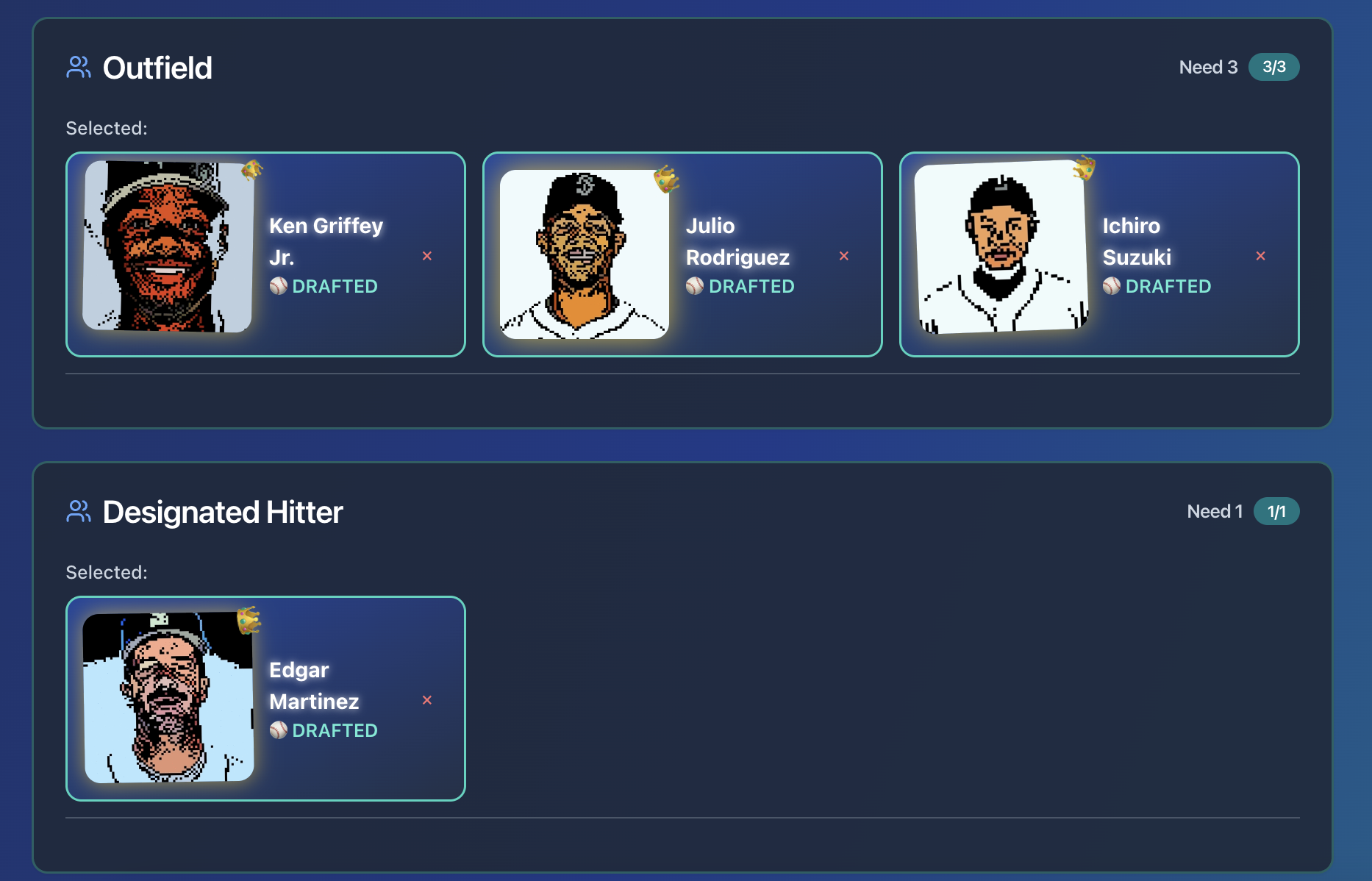
Ichiro Suzuki sets the tone. Even at the low end of his WAR band, he is still an elite contact hitter, baserunner, and defender. His ability to pressure defenses plays perfectly in a modern context.
Ken Griffey Jr. in center field represents the ideal version of a franchise player. His WAR band captures the seasons where he was healthy and dominant. Power, defense, and presence all show up in the results.
Julio Rodríguez brings modern athleticism and star power to right field. His WAR band reflects a player already producing at an elite level while still ascending.
Edgar Martinez is the offensive engine. His Seattle career provides one of the most consistent WAR profiles imaginable. On base skills, power, and discipline translate cleanly to any era.
There are no easy outs. Every inning forces pitchers to work.
The Rotation: Power Meets Precision
The rotation starts with Randy Johnson. His WAR band captures the years when he was simply overpowering. Even at his floor, he is still an ace who dominates matchups. 3-5 in the rotation is very debatable… Has Bryan Woo and Logan Gilbert proven enough to be all-time Mariners? How could we leave Jamie Moyer off the list with such a long career? The answer: We wanted to put together the best overall team... Jamie Maybe had one of the best careers, but his ERA was often closer to 4 which puts him just outside in terms of performance.
Félix Hernández follows with his prime seasons anchoring the staff. This simulation avoids his late career decline and focuses on the stretch when he was one of the best pitchers in baseball.
Luis Castillo adds modern consistency. His WAR band reflects a pitcher who limits damage and thrives against both right handed and left handed hitters.
Bryan Woo and Logan Gilbert round out the rotation with strike throwing, velocity, and efficiency. Both fit perfectly into today’s pitching environment…. Gilbert could have easily been switched in or out of this list too.
This staff does not rely on perfection. It relies on depth.
The Bullpen: Short, Simple, Effective
The bullpen is intentionally lean.
Kazuhiro Sasaki handles the ninth inning. His Seattle years were elite and consistent, and his WAR band reflects a true shutdown closer.
Bill Caudill There is a reason they have a giant 12 foot image of Bill Caudill near the Pen at T-Mobile Park. Next time you are at the stadium, go find it!
In a real season, more arms would be added. In the simulation, this group was enough.
The Methodology: Why WAR Bands Matter
WAR is a powerful tool, but it becomes misleading when used incorrectly. Assigning every player their single best season ignores how baseball actually works.
Instead, we used WAR bands.
Each player was assigned:
A maximum WAR based on their best Seattle seasons
A minimum WAR based on their lowest credible prime level performance
We excluded:
Rookie seasons that did not reflect future ability
Injury ruined years
Late career decline seasons that were not representative
For example:
Ken Griffey Jr.
Best WAR: 9.7
Low WAR: 6.499
Ichiro Suzuki
Best WAR: 9.2
Low WAR: 6.164
Each simulation places the player somewhere inside that range. Sometimes closer to peak. Sometimes closer to the floor.
This approach respects variance while still honoring greatness.
Final Thoughts
During the offseason, I wanted to share something analytical and fun. who wouldn’t want to build an All-Time mariners team and see how they would perform in todays MLB? We can’t say with 100% confidence… but it is fun thinking about it! what’s your All Time mariners Team? Try it yourself and see how your favorite players perform during a season!